Crosswalk and Intersection Injuries in Houston: When Drivers Are Liable for Pedestrians

Houston intersections can feel hostile if you are on foot. Turning cars cut across crosswalks, drivers rush yellow lights, and many people behind the wheel admit they were “only looking for other cars.” When a vehicle hits someone who is walking, the injuries are often severe and the legal questions get complicated fast. A Houston pedestrian accident lawyer can help sort out when the driver is legally responsible and how Texas law protects people in crosswalks and at intersections.
Why Houston Intersections Are So Dangerous for Pedestrians
Houston has made public commitments to safer streets through its Vision Zero program, with the goal of ending traffic deaths and serious injuries by 2030. The city’s Vision Zero materials point out that people walking are overrepresented in serious and fatal crashes compared to their share of daily trips.
TxDOT has also launched repeated statewide pedestrian safety campaigns, especially in October, when pedestrian crashes historically peak. Those campaigns urge both drivers and pedestrians to slow down, look twice, and treat crosswalks more carefully.
In the Houston area, serious pedestrian crashes tend to cluster:
- Along wide, fast arterials with multiple lanes
- Near freeway frontage roads
- Around busy intersections by shopping centers and apartments
- Near schools and parks where children cross on foot
When you combine high speeds, long distances between safe crossings, and heavy turning traffic, crosswalk and intersection injuries are almost guaranteed to follow.
When Drivers Must Yield in Crosswalks (Marked and Unmarked)
Texas law gives pedestrians strong protections in many crosswalk situations, even if there are no painted stripes on the ground.
Under Texas Transportation Code § 552.003, a driver must stop and yield the right-of-way to a pedestrian in a crosswalk when there is no working traffic signal and the pedestrian is on the driver’s half of the road or close enough to be in danger. This is true whether the crosswalk is marked with paint or unmarked at the intersection.
In practice, that means:
- At a four-way intersection, there is usually a legal crosswalk from corner to corner, even if it is not painted.
- If you are already in that crosswalk and a driver is approaching, they must slow down or stop so they do not hit you.
- Drivers turning right or left at a light must watch for people in the crosswalk and yield before they move.
When drivers are impatient, they often:
- Turn right on red without checking the crosswalk
- Turn left on a green light while watching oncoming cars, not the people walking across
- Roll through crosswalks at driveways, parking lot exits, and gas stations
In all of these situations, a driver who fails to yield and hits someone walking can be held liable for the injuries that follow.
When Pedestrians Must Yield or Share Fault
Pedestrians also have duties under Texas law. For example:
- Outside of a crosswalk, people walking generally must yield the right-of-way to vehicles on the roadway.
- Pedestrians should not suddenly leave a curb or safe place and move into the path of a vehicle that is so close the driver cannot reasonably stop.
- At signalized intersections, pedestrians are supposed to follow “WALK/DON’T WALK” or similar pedestrian signals.
In real cases, responsibility is not always all-or-nothing. Texas uses comparative negligence, which means fault can be divided between the driver and the pedestrian. A person who is partially at fault can still recover injury compensation as long as they are not more than 50% responsible.
For example:
- A pedestrian crosses mid-block at night, but the driver is speeding and on the phone.
- A child steps into a crosswalk slightly late in the signal, but the driver runs a red light.
In these cases, an insurance company may argue that the person on foot “should have been more careful.” A good Houston personal injury lawyer will push back by showing how the driver’s choices—speed, distraction, ignoring signals—were the real cause of the collision.
Common Crosswalk and Intersection Crash Scenarios in Houston
Some patterns repeat over and over in Houston pedestrian accident cases:
- Right turns on red. Drivers look left for cars, not right for people entering the crosswalk.
- Left turns at busy intersections. Drivers rush to “beat the light” and focus on gaps in traffic instead of people crossing.
- Frontage roads and slip lanes. Fast-moving traffic from freeway exits meets people walking to bus stops, hotels, or restaurants.
- School zones. Kids crossing near schools early in the morning or after school are especially vulnerable when drivers ignore reduced speed limits or school crossing guards.
- Nighttime and low visibility. Reduced lighting, glare, and dark clothing make pedestrians harder to spot, but drivers still have a duty to adjust their speed and pay attention.
When any of these situations ends with a person on the ground, the central question for a Houston pedestrian accident lawyer is whether the driver acted as a reasonably careful person would have under the circumstances. Speed, signal obedience, visibility, and driver attention all matter.
Proving Driver Liability After a Pedestrian Accident
To show that a driver is liable, your lawyer will look at many types of evidence, such as:
- Police report. The officer’s report may note where the pedestrian was walking, which direction traffic was moving, and whether the driver received a citation.
- Scene photos and video. Pictures of the crosswalk, traffic lights, skid marks, parked cars, and sight lines help show what each person could see and when. Nearby businesses, bus cameras, and home security systems can capture key footage.
- Witness statements. People who saw the collision can clarify whether the pedestrian was in the crosswalk, had the signal, or was visible before impact.
- Road design and signals. The presence or absence of marked crosswalks, countdown timers, advance stop bars, and school-zone signs all shape how safe the crossing should have been.
- Injury and impact evidence. The type and location of injuries can be consistent with certain impact angles and speeds, helping reconstruct what happened.
All of this can help prove that the driver failed to yield, drove too fast for conditions, or simply did not look for people on foot.
How Insurance Works for Injured Pedestrians in Houston
Pedestrian cases are not limited to the driver’s insurance. Several coverages may help:
- At-fault driver’s liability insurance. This is the main policy that should pay for medical bills, lost wages, pain and suffering, and other damages.
- Your own auto policy (PIP or MedPay). If you have Personal Injury Protection (PIP) or Medical Payments coverage on your car insurance, it may apply even if you were walking at the time of the accident.
- Uninsured/underinsured motorist coverage (UM/UIM). If the driver flees the scene or does not have enough insurance, UM/UIM on your own policy—or a household member’s policy—can often step in and treat you as if the at-fault driver had proper coverage.
This is one reason it helps to review your uninsured motorist claim in Texas guide. That article explains how UM/UIM works for drivers, and many of those same rules apply when a person is hit while walking or using a crosswalk.
What To Do After a Pedestrian Accident in Houston
The steps you take after a pedestrian accident can affect both your health and your case:
- Call 911.
Report the accident and request medical help. A police response creates an official record of the collision. - Get medical care right away.
Even if you can stand up and walk, you may have head, neck, back, or internal injuries that are not obvious at the scene. - Stay at the scene if you can do so safely.
Do not chase the driver. Try to remain in a safe place until police and EMS arrive. - Get contact and insurance information.
If possible, collect the driver’s name, license plate, and insurance details, as well as names and numbers for any witnesses. - Take photos and video.
Capture the intersection, crosswalk, traffic signals, vehicles, and any visible injuries or blood on the ground. - Request the accident report later.
In Texas, many accident reports can be ordered through TxDOT’s online accident records system. Having your own copy makes it easier to spot errors and share information with your lawyer. - Be careful with insurance calls.
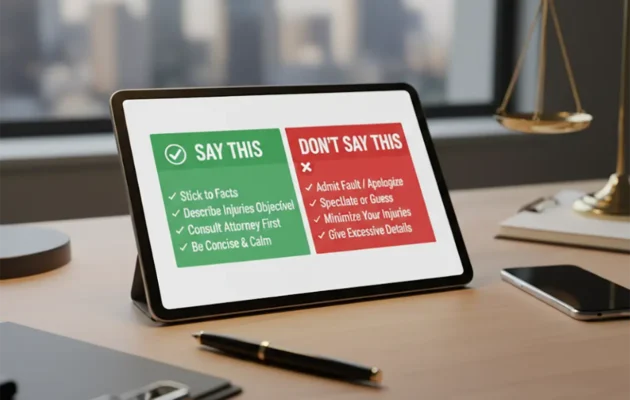
You may need to notify your own insurer, but you do not have to give a recorded statement to the at-fault driver’s company before you speak with a lawyer. - Talk with a lawyer who handles pedestrian cases.
A Houston personal injury lawyer with pedestrian case experience can explain your rights, deal with the insurance companies, and push back against claims that you were at fault.
Talk With a Houston Pedestrian Accident Lawyer About Your Crosswalk Injury
If a driver hit you in a crosswalk or at a Houston intersection, you are the one facing the hospital bills, missed work, and long-term pain. You should not have to guess whether the driver was really at fault or if an insurance company is giving you the full story. A Houston pedestrian accident lawyer can review how the crash happened, explain your rights, and handle the legal and insurance issues while you focus on healing.
At JB Law, we represent injured pedestrians in Houston, Spring, and across Texas. We know how often drivers say they “never saw” the person walking, and we know how to look past those excuses. We review the police report, study the intersection design, gather photos and videos, and work with your medical providers to understand what this injury has done to your life.
If you were hurt in a crosswalk or intersection anywhere in the Houston area, we invite you to contact JB Law. We will listen to what happened, give you straightforward answers about your options, and explain how we handle pedestrian accident claims from start to finish.